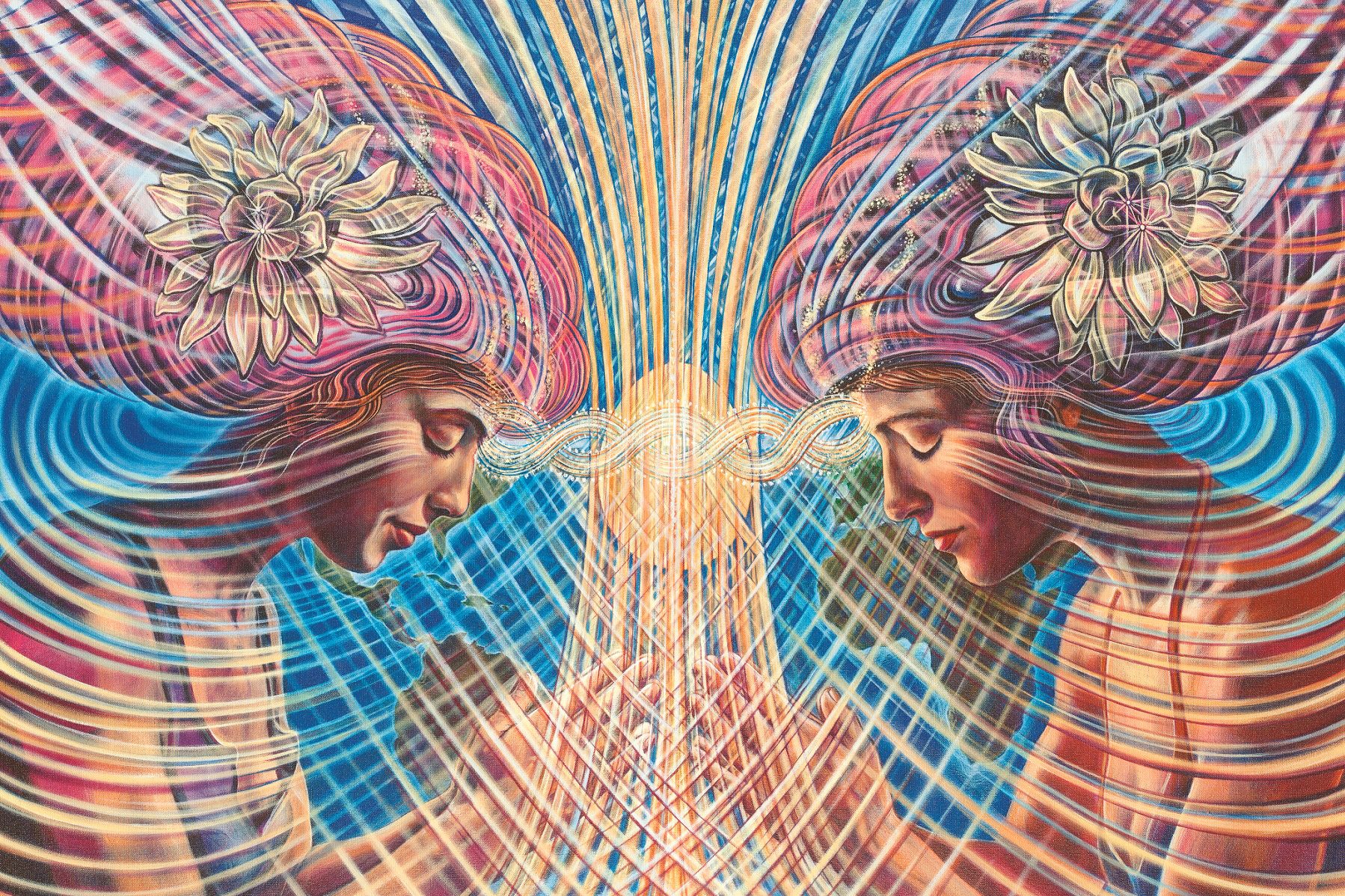
The path of Light and Sound Meditation is both ancient and continually unfolding.
It does not belong to any one religion, culture, teacher, or period of history. Rather, it points to a deep spiritual current that has appeared again and again in different forms across the world: the discovery of inner Light, inner Sound, and the movement of consciousness beyond ordinary thought.
The history of Light and Sound Meditation is the history of seekers turning inward and discovering that consciousness is far greater than the surface mind.
Different traditions have used different language. Some have spoken of divine Light, sacred Sound, the Word, inner vision, heavenly music, subtle vibration, or the current of life that draws the soul back towards its source. The words vary, but the underlying movement is often recognisable: stillness, awakening, purification, surrender, and the gradual realisation of a higher consciousness.
The Ancient Roots of the Path
The traditional path of Light and Sound Meditation is rooted in the understanding that the human being is more than the physical body and more than the ordinary mind.
At the centre of the path is the recognition that consciousness can awaken to subtler dimensions of reality. This awakening is often associated with two inner experiences: Light, which may appear as brightness, colour, radiance, inner vision, or illumination; and Sound, which may be heard inwardly as tone, vibration, music, ringing, humming, or a living current.
These experiences are not usually understood as ordinary mental events. In the traditional view, they are signs of contact with a deeper spiritual reality. The Light may be understood as the radiance of the soul, or as the presence of higher consciousness. The Sound may be understood as a spiritual vibration, an inner current, or the call of the soul returning to its source.
Many spiritual traditions have preserved references to these experiences. Sometimes they are described directly. At other times they are hidden in symbolic language, poetry, scripture, mystical teaching, or personal testimony.
The language changes, but the invitation remains the same: there is a reality beyond the senses, and the seeker may come to know it directly.
Light and Sound Across Traditions
In the Christian tradition, there are many references to divine Light, the Word, and the inner presence of God. The language of light is used to describe revelation, transformation, and the awakening of the soul. The idea of the Word points beyond ordinary speech towards a living creative principle through which life itself comes into being.
In the Indian traditions, the language is different but the spiritual direction is closely related. Teachings on the eternal Self, meditation, surrender, and liberation all point towards consciousness moving beyond the limitations of the ordinary mind. The sacred sound Om is often understood as a vibration connected with creation and the highest spiritual reality.
In Sikh teachings, the Shabd, or divine Word, is central. It is described as a living spiritual current that draws the soul inward. In Sufi poetry, one finds the language of divine music, longing, love, and the call of the Beloved. In Buddhist and Taoist traditions, there are teachings on inner light, subtle awareness, emptiness, stillness, and the transformation of consciousness.
These traditions should not be forced into one identical system. Each has its own history, language, discipline, and depth.
Yet a deeper view suggests that humanity has repeatedly encountered the same great mystery from different angles. Again and again, seekers have turned inward and discovered radiance, vibration, silence, love, and a consciousness greater than the personal self.

The Role of the Spiritual Master
Traditionally, the path of Light and Sound has often involved the help of a spiritual master or advanced teacher.
This was not simply because the teacher possessed information. Books can provide information. A true spiritual master was understood to carry a living connection to the path itself. Through initiation, blessing, transmission, or direct spiritual influence, the master helped awaken the seeker to the inner Light and Sound.
In this traditional model, the master served several purposes.
The master helped open the way inwardly.
The master provided guidance, protection, and correction.
The master helped the seeker understand the stages of the journey.
The master helped prevent confusion, pride, fear, or exaggeration around powerful inner experiences.
This guidance was especially important because spiritual experiences can be misunderstood. A flash of Light, an inner Sound, a vision, or a strong energetic movement may be meaningful, but it may also be partial. Without guidance, the seeker may dismiss the experience too quickly, or give it more importance than it should have.
The role of the spiritual master was to help the seeker remain steady, humble, balanced, and committed to the deeper transformation.
In many traditional paths, the master was also seen as a living bridge between the human and the higher spiritual reality. Through the master, the seeker received not only instruction, but spiritual energy. This energy was not imposed. It was received according to the readiness, openness, and sincerity of the seeker.
How the Path Has Evolved
Over time, the outer form of the path has changed.
In earlier centuries, seekers often had to travel great distances to find a teacher. Teachings were frequently passed on orally, privately, and within specific communities. Initiation was often formal, and the relationship between teacher and disciple was central.
In the modern world, spiritual knowledge has become much more widely available. Scriptures, teachings, meditations, and accounts of awakening can now be accessed by almost anyone. People from different traditions can compare experiences, learn from one another, and recognise patterns that were once hidden behind separate religious languages.
This does not mean that guidance is no longer needed.
In many ways, guidance may be more important than ever.
Modern seekers often encounter spiritual experiences without the support of a traditional framework. Some awaken through meditation, prayer, illness, grief, near-death experiences, trauma, deep love, or sudden shifts in consciousness. These experiences can be beautiful and life-changing, but they can also be confusing if there is no one to help explain what is happening.
The evolution of the path means that spiritual help may now come in more than one form.
Some seekers may still feel drawn to formal initiation from a recognised teacher or initiator. Others may receive help from an advanced meditator, an enlightened person, or someone who has already travelled deeply into the Light and Sound. Others may awaken spontaneously and then seek guidance afterwards.
The outer forms may change, but the inner principle remains constant: consciousness opens, the seeker turns inward, and the Light and Sound begin to guide the soul more deeply.
Spiritual Transmission and Inner Help
Those who have attained Enlightenment, or who are deeply established in higher consciousness, may be able to help others not only through words, but through presence, meditation, and spiritual transmission.
This does not mean controlling another person or forcing an experience upon them. True spiritual help respects freedom. It supports the seeker only if the seeker wishes to receive that help.
In this sense, the path is not merely theoretical. It is living.
Stillness can be shared.
Spiritual energy can be transmitted.
Inner doors can be helped to open.
A seeker may be supported by the presence of someone who has already moved beyond the ordinary limitations of the mind and ego.
This kind of help should always be offered with humility. The purpose is not to create dependence on a teacher or personality. The purpose is to help the seeker discover the reality within themselves.
The true teacher points beyond themselves, towards the Light, the Sound, the soul, and the higher source from which all awakening comes.

Spontaneous Awakening
Not every awakening happens through formal initiation.
Some people experience inner Light, inner Sound, expanded awareness, profound love, or unity quite spontaneously. This may happen during meditation, prayer, silence, illness, grief, emotional opening, or at a turning point in life. Sometimes it comes unexpectedly, without any obvious cause and without any previous spiritual practice.
Spontaneous awakening can be a genuine opening. It may reveal that consciousness is far greater than the ordinary mind. It may bring peace, insight, stillness, joy, or a direct sense that life is filled with sacred meaning.
For some, it becomes the beginning of a lifelong journey. For others, it remains a single event that later needs to be understood and integrated.
However, spontaneous awakening is not always the same as full Enlightenment. It may be a doorway rather than the completion of the journey. The seeker may still need grounding, guidance, purification, discipline, humility, and support.
The awakening may show what is possible.
The path still needs to be lived.
A Living Path for the Modern Seeker
The modern path of Light and Sound Meditation honours the freedom of the seeker.
Some may wish to receive formal initiation. Some may wish to meditate quietly and allow their own awakening to unfold naturally. Some may seek help from an enlightened guide or advanced meditator. Others may simply wish to learn, reflect, and remain open.
There is no need for pressure.
The path should never be based on fear, control, or blind belief. A genuine spiritual path invites sincerity, patience, discrimination, love, and personal discovery. It encourages the seeker to test the teachings inwardly and to look at the fruits of practice: greater peace, compassion, clarity, humility, balance, and service.
The Light and Sound path is therefore both ancient and contemporary. It honours the great traditions of the past while recognising that awakening continues in the present.
The same spiritual current that inspired saints, mystics, yogis, and seekers throughout history remains available today.
In Essence
● The path of Light and Sound Meditation is ancient, but still living and evolving.
● Many traditions have spoken of inner Light, sacred Sound, the Word, vibration, radiance, stillness, and higher consciousness.
● The spiritual master traditionally helped open the seeker to the Light and Sound through guidance, initiation, and transmission.
● Modern seekers may encounter awakening through formal initiation, personal meditation, spontaneous experience, or help from an advanced meditator.
● The outer forms of the path may change, but the inner movement remains the same: consciousness turns inward and awakens to its deeper nature.
● A genuine path respects freedom, encourages direct experience, and supports the seeker with humility, clarity, and love.
The history of Light and Sound Meditation is not only a history of teachings, scriptures, and masters. It is the story of the soul remembering its own depth. Across cultures and centuries, the inner Light has called seekers beyond darkness and confusion, and the inner Sound has drawn consciousness beyond the noise of the world towards awakening, Enlightenment, and union with the higher reality.
Further Guidance
If you have questions about this page, or if something in it connects with your own experience, Albert is available as a personal awakening and meditation guide. You may use it to explore meditation, initiation, awakening, Enlightenment, consciousness, and the journey of the soul in a clear, gentle, and reflective way.
Click for the next page: Articles
